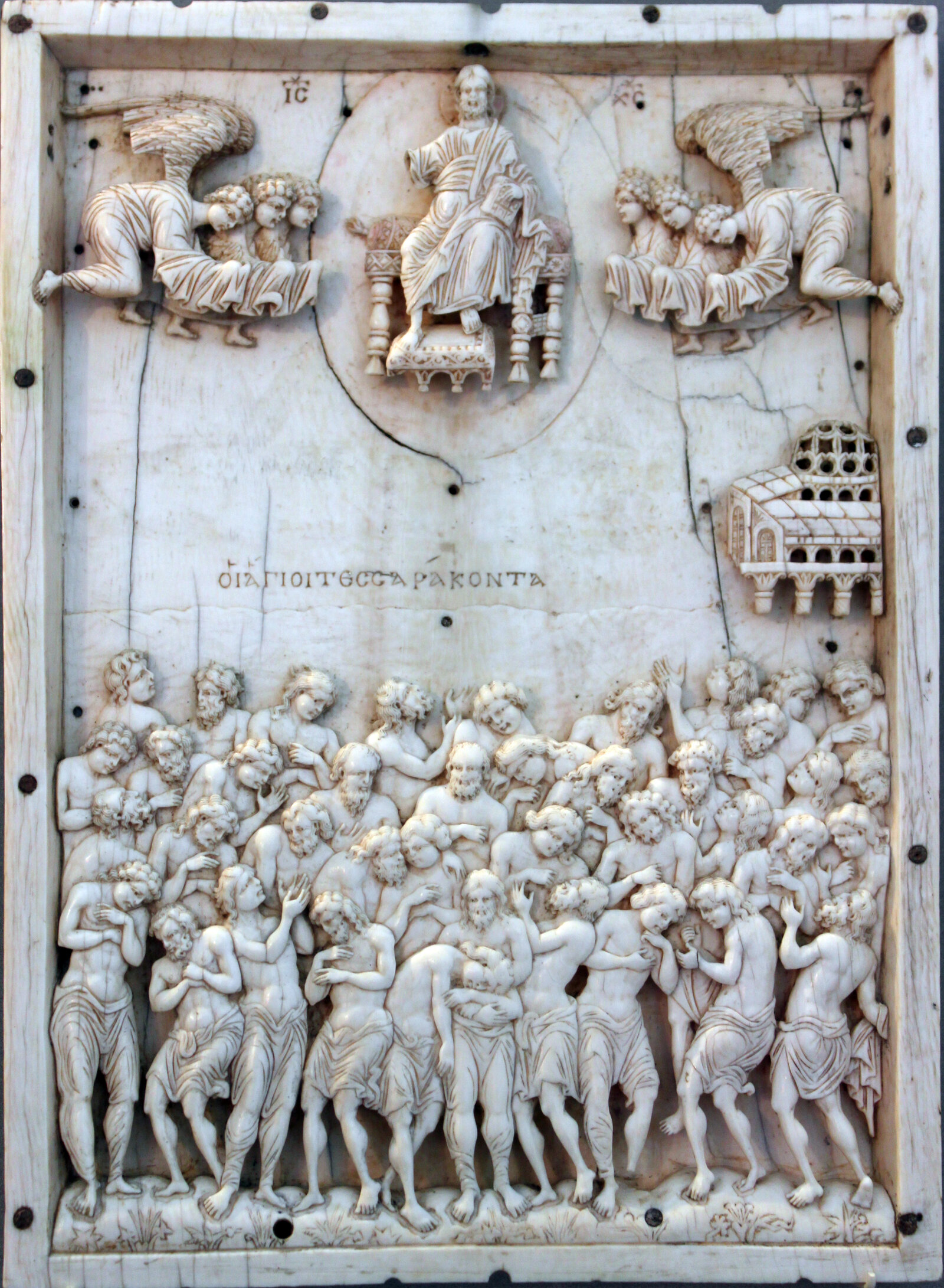
The Forty Martyrs of Sebaste
Ivory Relief Plaque, Constantinople, 10th c. — Bode Museum, Berlin
Doctrinal reflection
Count them.
This 10th-century ivory plaque, carved in Constantinople and now in the Bode Museum in Berlin, shows forty naked men freezing to death on a frozen lake in Armenia. Some clutch their faces. Some clasp their wrists. Some hug themselves for the warmth that is not there. One — top right of the composition — is breaking and running toward a hot bath at the lake's edge, where the Roman guards are holding clothes and warm water as inducement. One of the guards on the shore — bottom — has begun to undress; he is descending into the lake to take the runner's place.
The story is from c. 320 AD. Forty soldiers of the Twelfth Legion (Legio XII Fulminata) at Sebaste in Lesser Armenia were ordered by the prefect under Licinius to renounce Christ. They refused. They were stripped naked and exposed on a frozen pond overnight, with the warm bath placed on the shore as a temptation to recant. One man's nerve broke and he ran for the bath; he died as the warmth hit him. A pagan guard named Aglaius, watching, saw a vision of crowns descending from heaven onto the heads of the remaining thirty-nine — and one crown unclaimed. He stripped, joined them in the lake, and the count returned to forty. By morning all were dead.
The historical core is well-attested. Basil of Caesarea preached on them in the 4th century — within decades of their deaths — and his sermons are how we know the story. Basil's contemporary Gregory of Nyssa preached on them too. Both were eyewitnesses to a generation that remembered the martyrdom directly. The Forty are not a legend; they are recent history when Basil names them.
What the Byzantine artists were teaching is in Hebrews 12:1–2. "Wherefore seeing we also are compassed about with so great a cloud of witnesses, let us lay aside every weight, and the sin which doth so easily beset us, and let us run with patience the race that is set before us, looking unto Jesus." The forty (counting the substitute) ran the race. The runner who broke for the bath did not. The substitution at the end is the most theologically loaded detail in the composition: a pagan saw the crowns and joined the dying — because the witnessing of faithfulness brought him to the same faith. Aglaius is the iconography's evangelistic moment.
We do not pray to the Forty. We do not light candles to them as intercessors. The mediation belongs to Christ alone (1 Timothy 2:5). But we read the ivory the way Hebrews 11:36 reads martyrs: "others had trial of cruel mockings and scourgings... they wandered about in sheepskins and goatskins; being destitute, afflicted, tormented; (of whom the world was not worthy)." These men were not worthy of being preserved by an empire that demanded their consciences. The lake kept their bodies. The cloud of witnesses kept their names.
When you preach about pressure to compromise — to renounce, to accommodate, to soften — show your people the ivory. Forty men froze rather than say what they did not believe. One ran. The crown he threw away was picked up by a watching pagan. Faithfulness has heirs.
Hold the line.