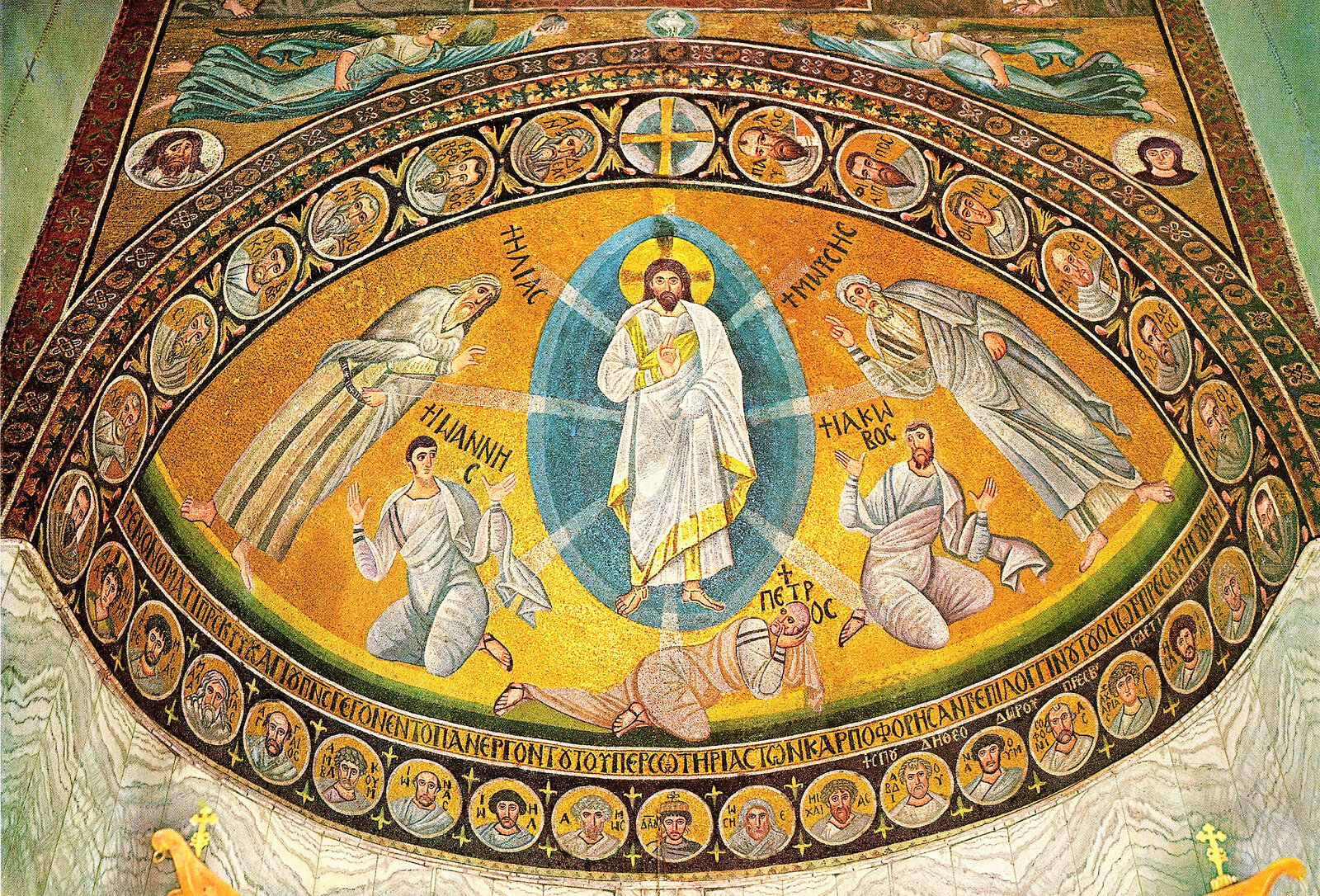
Christ in the Transfiguration
Apse Mosaic, Saint Catherine's Monastery
Doctrinal reflection
The artists were standing on Sinai when they painted Sinai.
The apse mosaic of the Katholikon at Saint Catherine's Monastery is the oldest surviving image of the Transfiguration. The basilica was built by Justinian around 565 at the foot of Mount Sinai — the same mountain where Moses received the law. The mosaicists who decorated the apse placed the Transfiguration in the conch and put two Sinai scenes on the triumphal arch above: Moses at the burning bush on one side, Moses receiving the tablets on the other.
That is no accident. The artists understood that the Transfiguration was a Sinai event. Christ on Mount Tabor is doing in flesh what God did on Mount Sinai in cloud — descending in glory, revealing himself, terrifying the witnesses. Moses appears in both scenes. So does Elijah. The same God who spoke from the burning bush is the one whose Son speaks from the cloud, and the geometry of the apse insists on it.
Matthew 17 records what the apostles heard from the cloud: "This is my beloved Son, in whom I am well pleased; hear ye him." That voice is the same voice that thundered on Sinai. It now identifies a single Galilean as the one to be heard.
Peter never forgot it. Decades later he writes, "We were eyewitnesses of his majesty... when we were with him in the holy mount" (2 Peter 1:16, 18). The mosaicists at Sinai painted Peter's eyewitness account in glass.
When you preach the deity of Christ, do not argue from logic alone. Argue from the mountain. The disciples saw him. The apostles wrote it down. The Byzantines mosaicked it in. The Christ of the Transfiguration is the one we still hear.