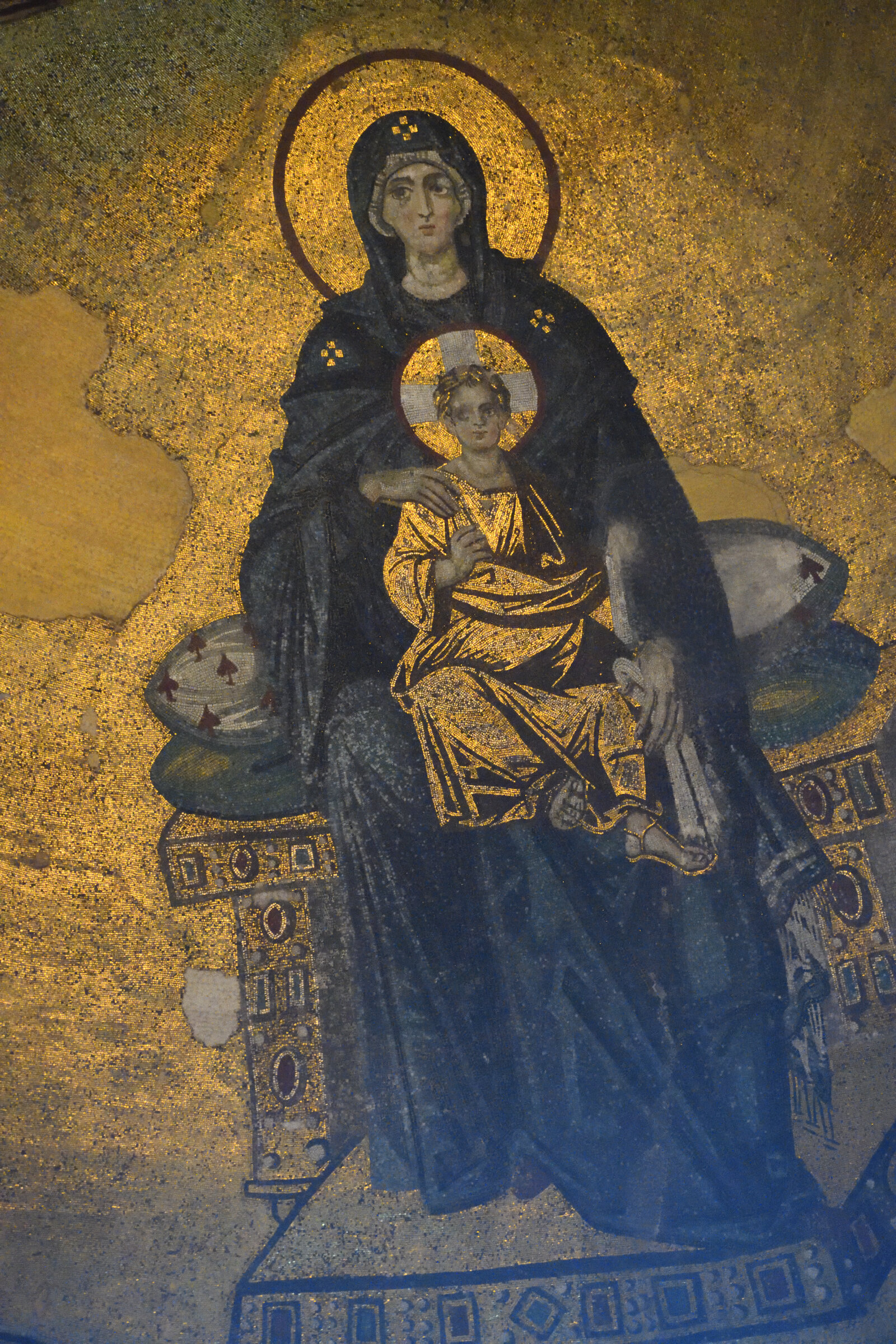
Theotokos of the Apse
The Iconoclasm-Recovery Mosaic — Hagia Sophia
Doctrinal reflection
This mosaic settled an argument.
The Theotokos in the apse of Hagia Sophia was inaugurated on March 29, 867. Patriarch Photios delivered the homily. The emperors Michael III and Basil I were present. After more than a century of iconoclasm, the empire had returned to figural Christian art — and the first major image they unveiled in their greatest cathedral was a mother holding her child.
That choice was deliberate. The iconoclasts had argued that Christ could not be painted because his divinity could not be circumscribed. The image-defenders answered: the incarnation circumscribed him for us. He became flesh. He had a face. He had a body that pressed against a woman's lap. To say he cannot be painted is to say he did not really come.
John 1:14: "And the Word was made flesh, and dwelt among us." Colossians 1:15 names Christ "the image of the invisible God." The Greek there is eikōn — icon. Christ is, in his own person, the eikon of the Father. The Hagia Sophia mosaic does not make him an image. It records that he already is one.
Photios said it directly in his dedication homily: the image confesses what the iconoclasts had denied — that God really did take human flesh, and human flesh can be seen, and what can be seen can be drawn. The argument was not about Mary. The argument was about whether the incarnation was real. The Theotokos type — Mary holding the child — was chosen because it states the incarnation more directly than any other available scene.
Hagia Sophia's apse mosaic is the empire's signed declaration that the incarnation actually happened. We do not venerate it. But we agree with what it says. The Word became flesh. The Word had a body. The body had a mother. The mother held him in her arms in front of the whole watching empire.
That is the doctrine. The mosaic just makes it visible.