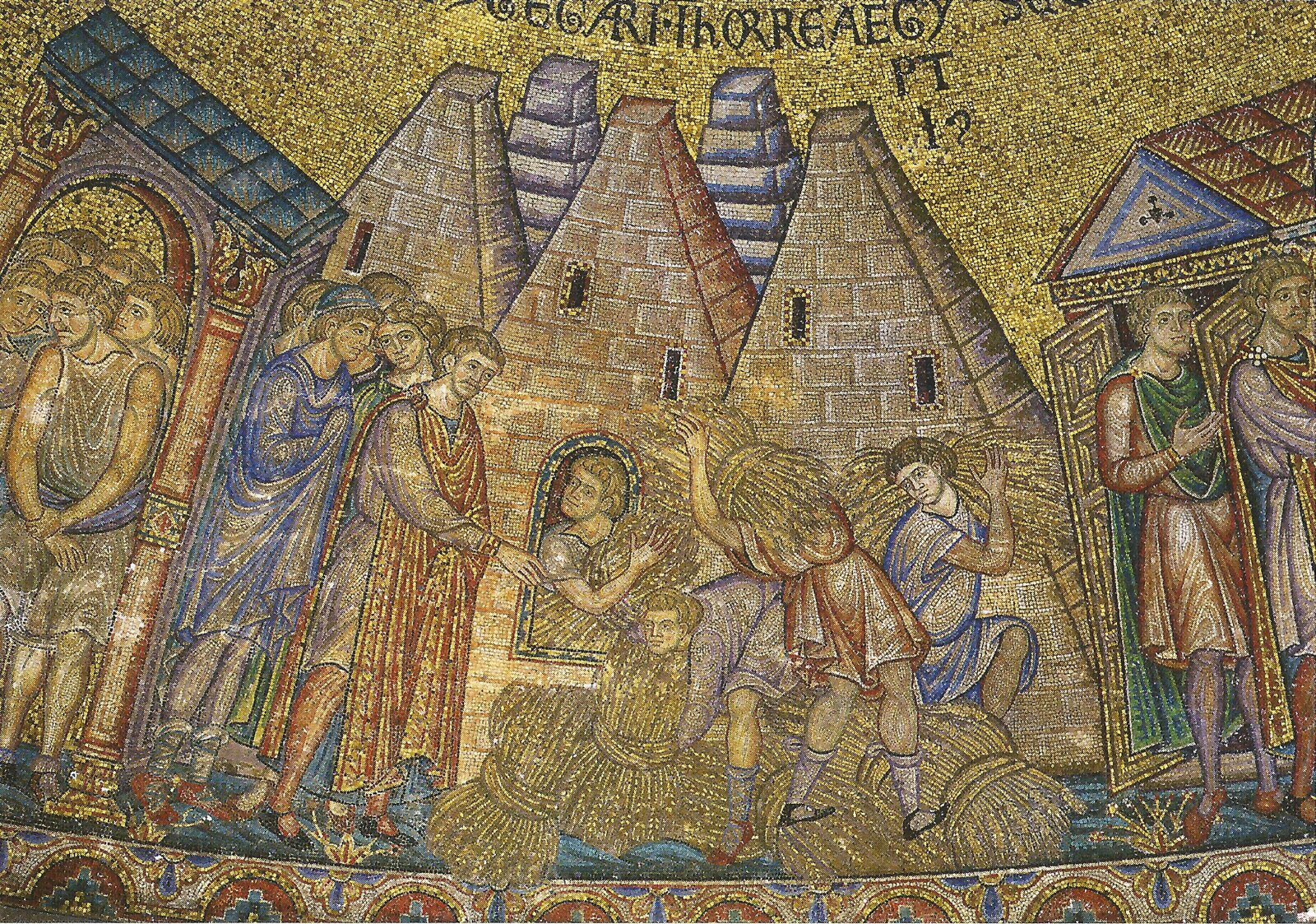
Joseph Gathering Corn
Joseph Cupola Mosaic (Third Cupola), North Narthex, San Marco, Venice — c. 1275
Doctrinal reflection
Joseph stands in the center, robed in royal Egyptian dress, gesturing toward the granaries on the right. Workers carry sacks of grain; bullocks pull a loaded cart in the foreground; the scene compresses the seven years of plenty (Genesis 41:48–49) into a single cupola panel. The mosaic is in the third Joseph cupola of San Marco's north narthex, Venice, c. 1275 — part of the most extensive surviving Genesis-and-Joseph mosaic cycle in the Byzantine-Venetian iconographic tradition. San Marco's atrium contains six cupolas of Genesis and Joseph narrative across the north and west arms, totaling over a hundred individual scenes.
Mode 1 typology, fully apostolically authorized. The Joseph cycle is the canonical OT Christ-typology, named in Acts 7 (Stephen's speech) and Hebrews 11. The corpus already activated this typology at #97 Vienna Genesis (Joseph and Potiphar's wife, faithful-witness-under-temptation register). The San Marco Joseph Gathering Corn renders a different Joseph episode — Joseph in glory, providing for famine — which carries a different typological register: Christ as the One who provides bread for the world's hunger.
The famine and the bread. Genesis 41 records Joseph's prediction of seven years of plenty followed by seven years of famine (Gen 41:25–32), and his administration during the plenty: gathering corn so that during the famine, all countries came into Egypt to Joseph for to buy corn (Gen 41:57). The typological reading runs: Joseph stores grain so that the world will have bread when famine comes; Christ stores up grace so that the world will have the bread which cometh down from heaven (John 6:50–58) when spiritual famine comes. Both Genesis 41:57 and John 6:35 share the verb of going-to-and-finding-bread. Joseph's grain becomes Christ's body in the typological progression.
The Christ-bread connection. John 6:35 — "I am the bread of life: he that cometh to me shall never hunger" — pairs structurally with Joseph's Egypt as the place of refuge from famine for the surrounding nations. The Eucharistic implication is present in patristic exegesis: Christ as the Joseph who stores up the bread that becomes his own flesh given for the life of the world. The corpus has handled the eucharistic-typology layering carefully (locked at #92 Abel-Melchizedek San Vitale: layered apostolic-tradition extension is legitimate when grounded in 1 Cor 11:23–26 etc.). The Joseph-bread typology operates by similar layering — not explicitly in Hebrews 7's direct apostolic exegesis, but legitimate apostolic-tradition extension building on Acts 7 + Heb 11 + John 6.
The Genesis 50:20 close. The Joseph cycle ends with the brothers reconciled and Joseph's word: "But as for you, ye thought evil against me; but God meant it unto good." The corpus read this at #97 Vienna Genesis as the typological seed of Romans 8:28 and the cross. The San Marco corn-gathering scene is the doctrinal middle of that arc — between Joseph's suffering (sold by brothers, imprisoned in Egypt) and Joseph's reconciliation (revealed to brothers, providing for them). The corn that Joseph gathers in his exaltation is the means through which the brothers will be saved from famine, including the brothers who sold him.
San Marco opens. The corpus's first San Marco entry. The basilica has substantial Byzantine-Venetian iconographic continuity from the 11th–14th centuries, with mosaic programs that imported Greek-Byzantine masters across the period. San Marco may grow to additional corpus entries — the atrium Genesis cycle alone has dozens of doctrinally-substantive scenes still untouched by the corpus.
Joseph stored the grain. The famine came. The brothers came to him for bread. He provided. The cycle ends but God meant it unto good — and Christ stores the bread that becomes his own flesh for the life of the world.