The Sign of Jonah
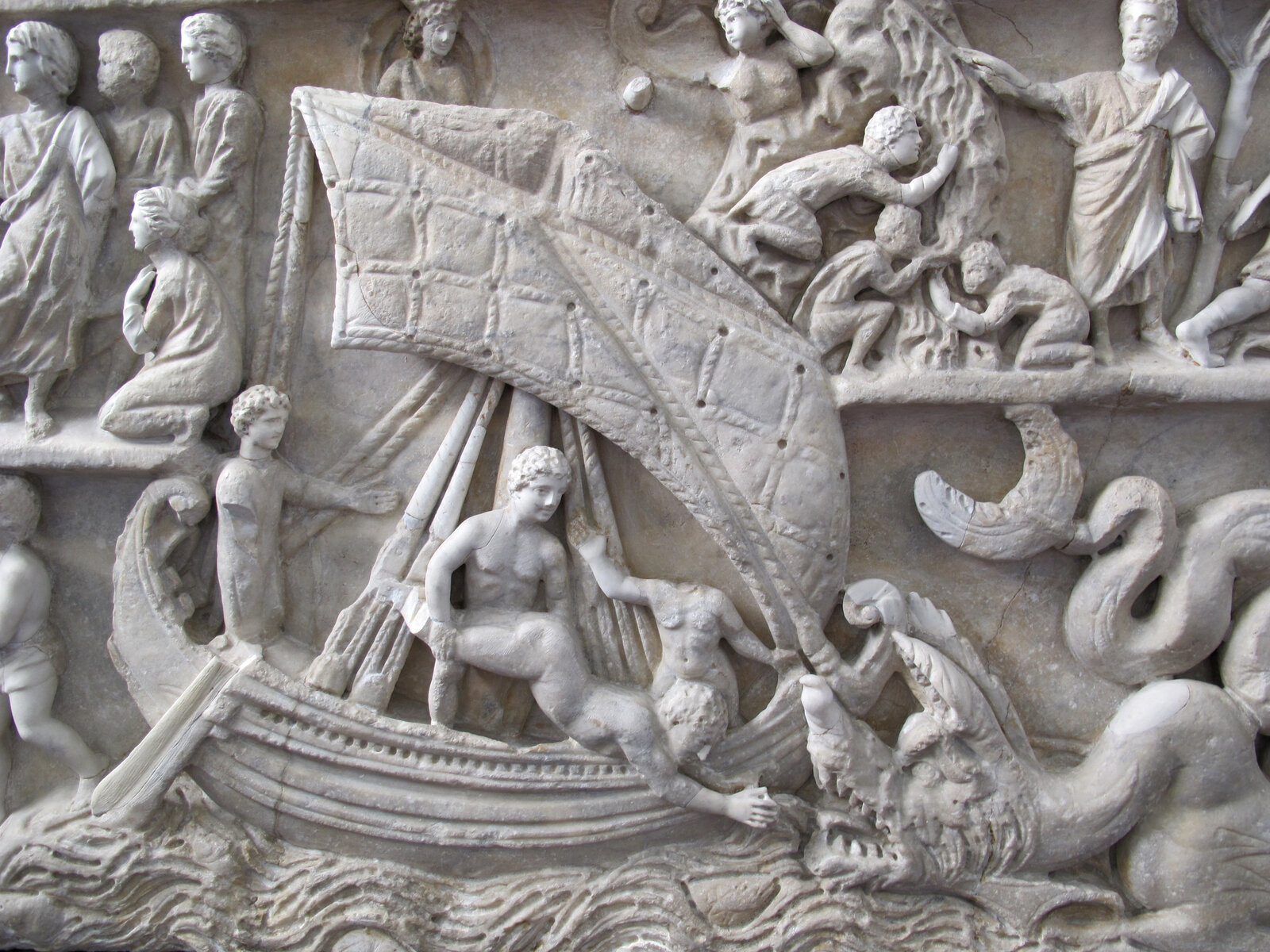
Christian Sarcophagus Relief, Vatican Necropolis (c. 280–300 AD)
Doctrinal reflection
Christ used this image himself.
This relief panel, carved on a Christian sarcophagus around AD 280–300, is older than Byzantine art proper. It comes from the Vatican necropolis, before Constantine, before the empire became Christian. But the iconography on this stone is the anchor of every Byzantine Jonah scene that would come later. Three episodes are carved across the panel: Jonah being thrown overboard from the ship; Jonah swallowed by the great sea-dragon; Jonah resting under the gourd vine after the monster spits him onto land. The narrative reads left-to-right, like a comic strip, and the central scene — the swallowing — is the theological center.
The reason early Christians carved Jonah on their tombs is in Matthew 12:39–40, in Christ's own words. "An evil and adulterous generation seeketh after a sign... no sign shall be given to it, but the sign of the prophet Jonas. For as Jonas was three days and three nights in the whale's belly; so shall the Son of man be three days and three nights in the heart of the earth." Christ named the typology himself. He did not borrow it from later Christian preachers. He used it in his own ministry — the only Old Testament event he ever pointed to as a type of his own death and resurrection.
That is decisive. We do not have to argue that Jonah is a type of Christ; Jesus said he was. The Christian who carved this sarcophagus around 290 AD knew his Lord's words and put them in stone over his loved one's grave. The body in the tomb was waiting to be raised, just as Jonah had been raised out of the sea. This carving is not just Old Testament narrative; it is a doctrinal claim about what is going to happen to whoever is buried beneath it.
Look at the composition again. The middle scene — the great sea-dragon swallowing Jonah — has a counterpart in the third scene, where the same dragon vomits him out. Death does not keep what God commands it to release. Three days. Then expelled. Living. Walking. Preaching. The Ninevites listened to a man who had been dead and was given back. They had to.
This pattern is the gospel. Jonah went down into the deep; Christ went down into the grave. Jonah was three days in the dark; Christ was three days in the dark. Jonah was thrown back onto the shore alive; Christ rose. Whoever is buried under this stone — and by extension, whoever buries their dead in Christ — is on the same trajectory. Down into the dark, then up onto the shore.
When you preach the resurrection, do not skip Jonah. Christ used him. The earliest Christians put him on their graves. The pattern was not invented by theologians; it was named by the Lord himself.
Be Obedient. Be Bold.