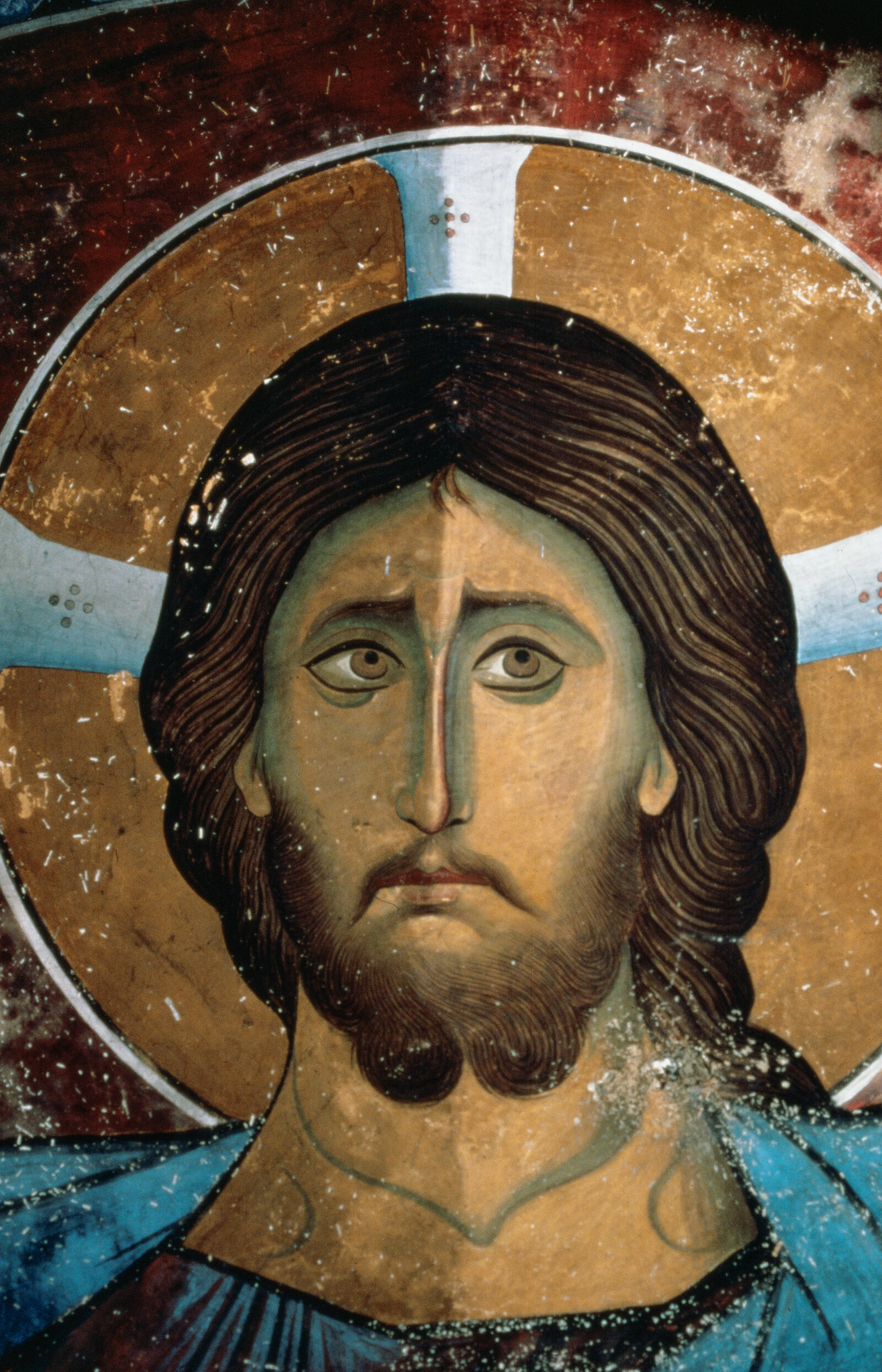
Christ Pantocrator
Dome Fresco, Panagia tou Arakos
Doctrinal reflection
Most Byzantine artists are anonymous. Here is one we can name.
The Pantocrator in the dome of the Panagia tou Arakos was painted by a monk named Theodore Apsevdis, who finished the work in December 1192. We know this because Apsevdis signed and dated it on the church's lintel — an unusual gesture in a tradition where the icon was meant to be transparent to its subject, not a window onto the artist.
The village is Lagoudera, in the Troodos Mountains of Cyprus. It was small then and is small now. Apsevdis had been trained in Constantinople — the imperial capital, the world center of Byzantine art. Whatever caused him to be here, in the mountains, painting a dome over a village, he treated the assignment as if he were still in the capital. The face of Christ in this dome is one of the most expressive Pantocrators in the surviving corpus.
The frescoes were finished one year after the Crusaders took Cyprus from the Byzantine empire. Apsevdis was a Greek monk now working in a kingdom newly ruled by a Frankish king. The political ground had shifted under his feet. The Christ he painted above the worshippers had not.
Paul writes in 1 Corinthians 15:58: "Therefore, my beloved brethren, be ye stedfast, unmoveable, always abounding in the work of the Lord, forasmuch as ye know that your labour is not in vain in the Lord." That is what Apsevdis did. He stayed in the mountains and abounded in the work of the Lord.
When you serve Christ in an obscure place, you serve the same Christ they serve in the capital. The dome at Lagoudera was painted in a village that history would have forgotten — and the village kept the faith, and the dome kept the Christ. We are still looking up at him 800 years later.
Do your work.