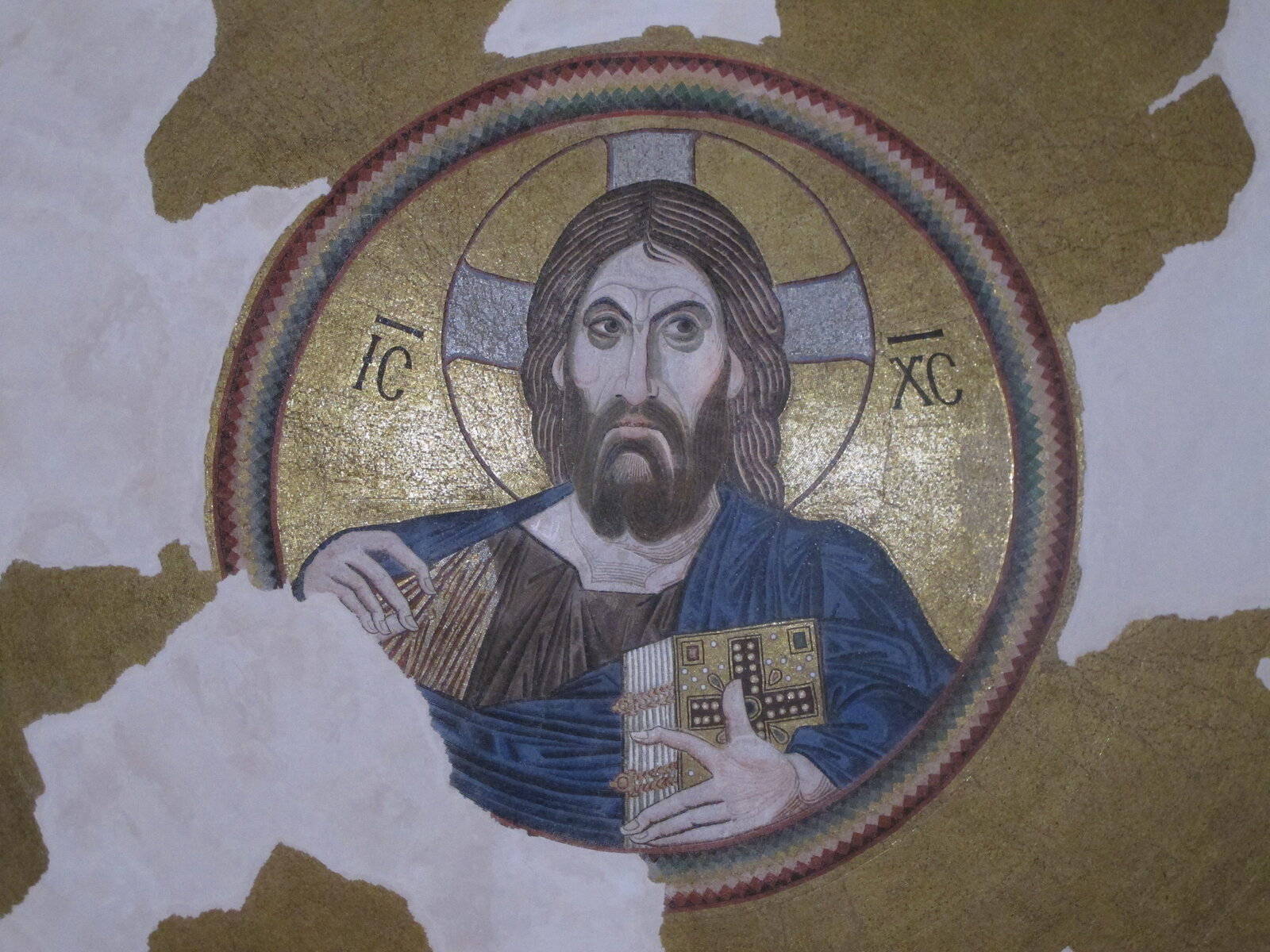
Christ Pantocrator
Dome Mosaic, Daphni Monastery
Doctrinal reflection
Stand in the center of the church and look up.
The Daphni Pantocrator is not on a wall — he is in the dome, the highest point of the building, looking down. Sixteen Old Testament prophets ring the base of the dome between the windows. Light falls on them from below and rises toward him. The architecture itself preaches: the prophets pointed forward, the light rises, Christ presides over all of it.
This is not a sentimental Christ. The Daphni Pantocrator is famous in art history for the severity of his expression — some scholars have called him "the angry Christ." His brow is heavy. His eyes do not soften. He looks like a man who has seen what the world is doing and intends to settle it.
Psalm 2 says, "Kiss the Son, lest he be angry, and ye perish from the way, when his wrath is kindled but a little." That is what the painter at Daphni was showing you. The Christ above the worshipper is the Christ of Psalm 2 — the Anointed one whose kings are warned to submit. The dome is a court, and the throne is occupied.
Hebrews 1:1–2 gives the theological logic of the architecture: "God, who at sundry times and in divers manners spake in time past unto the fathers by the prophets, hath in these last days spoken unto us by his Son." The prophets ring the dome because they pointed forward. Christ occupies the dome because he is the One they pointed to. The visual and the verbal say the same thing.
When you preach Christ, do not strip him of his height. The Lord who "sitteth in the heavens shall laugh" at the rebellion of nations. He is not equal to your sin. He is over it.