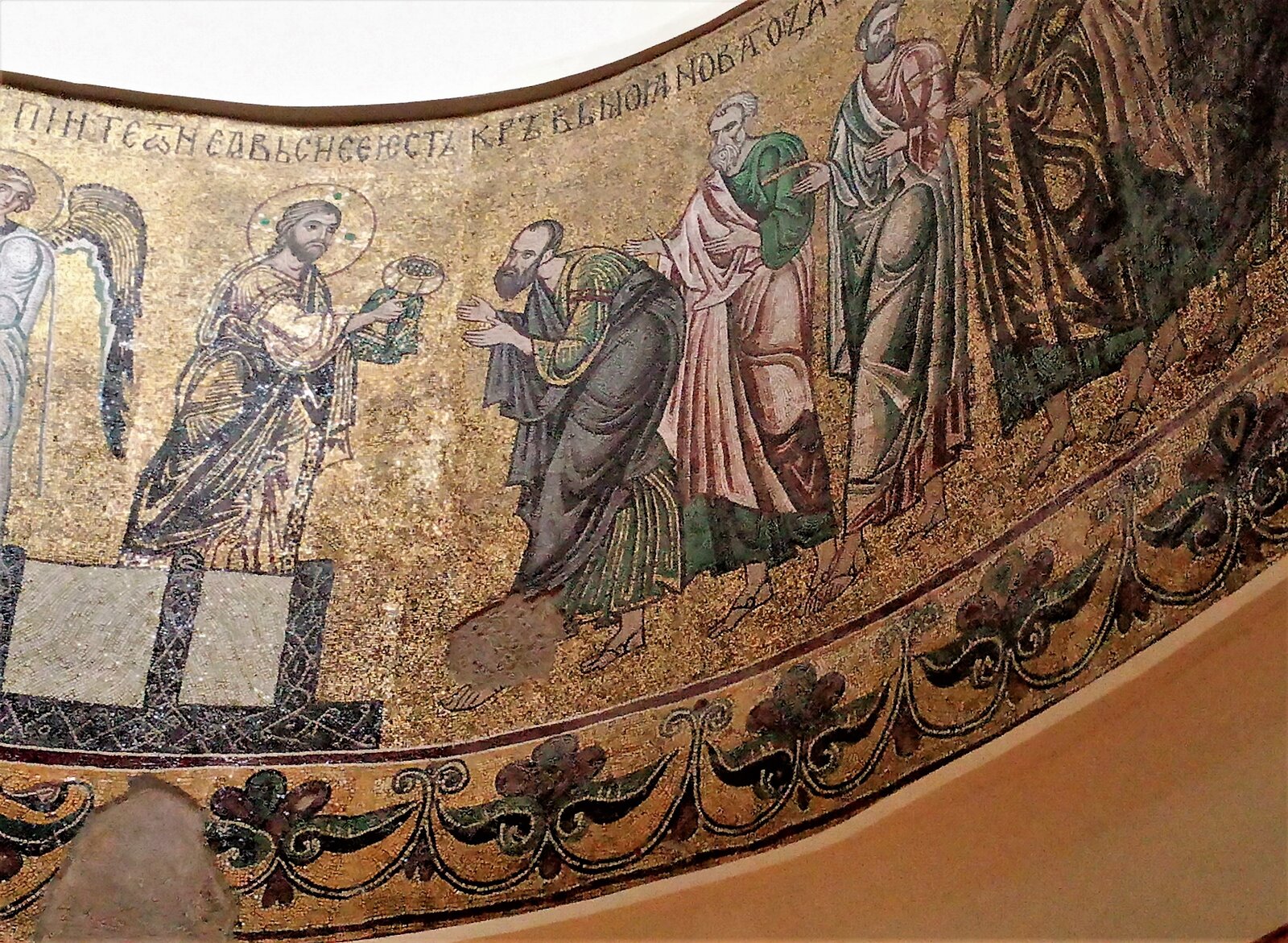
The Communion of the Apostles
Apse Mosaic, Saint Sophia Cathedral, Kyiv
Doctrinal reflection
He gave it to them with his own hand.
The Communion of the Apostles mosaic in the apse of Saint Sophia Cathedral in Kyiv, made around 1050 by Byzantine craftsmen brought to Yaroslav the Wise's new cathedral, shows Christ depicted twice in a single composition: on the left, giving bread to one line of apostles; on the right, giving the cup to another. Twelve apostles, six on each side, advance in procession toward Christ at the center. An altar stands between the two halves. The scene is positioned in the apse directly above where the Eucharist is celebrated by the priest below — the same architectural-theological staging we saw at Hosios Loukas (#30).
This is not a depiction of Luke 22 — the Last Supper. The Last Supper iconography (Christ and the Twelve at table together) is a separate Byzantine type. The Communion of the Apostles compresses the Last Supper into liturgical-eucharistic logic: Christ is the celebrant; the apostles are communicants; the rite repeats. The composition stages the doctrinal claim that what Christ did at the Last Supper is what the church does at every communion service since.
The historical apostles are foundational. Ephesians 2:20: "Built upon the foundation of the apostles and prophets, Jesus Christ himself being the chief corner stone." The Twelve received the bread and the cup directly from the incarnate Lord, and from them the practice was handed to the church. 1 Corinthians 11:23–26 records Paul receiving the eucharistic instruction from the Lord and delivering it to the Corinthians: "For I have received of the Lord that which also I delivered unto you, that the Lord Jesus the same night in which he was betrayed took bread..." The chain of delivery is apostolic.
GLM holds the memorial view (#30 Hosios Loukas template). The bread and cup proclaim Christ's death until he comes (1 Cor 11:26); the Spirit, not the elements, mediates his presence. The Kyiv apse stages something we do not metaphysically affirm — the Byzantine tradition reads the mosaic as a real-presence claim — but we engage what it gets right at the foundation: Christ instituted the meal; the apostles received it from him; the church continues it. On those three points, GLM agrees with the Byzantine tradition.
What does this mean for the Apostles collection? The apostles are not iconographically central in this mosaic; they are receivers. Christ is the one giving. That is the right ordering. The apostolic foundation of the church (Eph 2:20) rests on the apostles' having received — the gospel, the sacraments, the Spirit, the commission — from Christ. They were not the source. They were the first generation of the receivers, and the chain runs from Christ through them to us.
The communion table in your church this Sunday is the same meal in the same chain. Different room, different bread, different hand giving it. Same Christ instituting it.
When you serve communion, do not soften it into ritual. The first hands to receive it were the hands of the men in this mosaic. The Lord who fed them is feeding you.