Byzantine Art Project
150 artworks from the great traditions of Byzantine and Eastern Christian iconography, each paired with a doctrinal reflection. The corpus surfaces GLM's confessional shape case by case as the iconography requires it — read what the picture argues.
150
ARTWORKS
10
COLLECTIONS
17
FLAGSHIPS
1,250+
YEARS
COLLECTION:
ERA:
REGION:
MEDIUM:
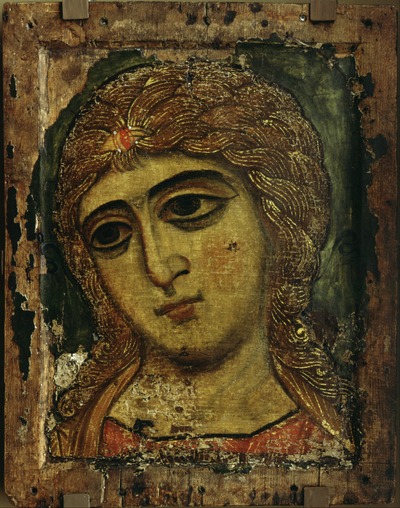 Angels
The Angel with Golden Hair (Archangel Gabriel)
Google Art Project / Wikimedia Commons. The underlying late-12th-century Novgorod-school icon at the Russian Museum is in the public domain.
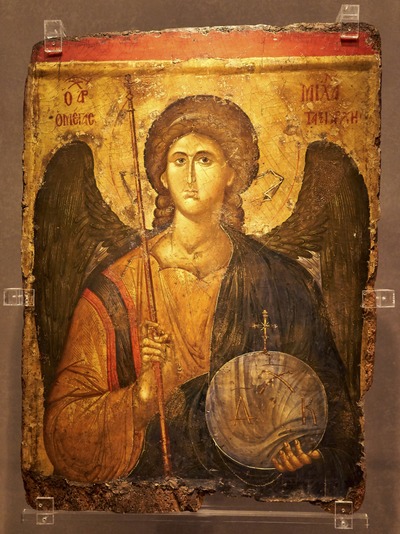 Angels
The Archangel Michael
Photograph by George E. Koronaios (2019). Wikimedia Commons. Released under Creative Commons Attribution-ShareAlike 4.0 International (CC BY-SA 4.0). The underlying c. early-14th-century icon at the Byzantine and Christian Museum, Athens (BXM 1353) is in the public domain.
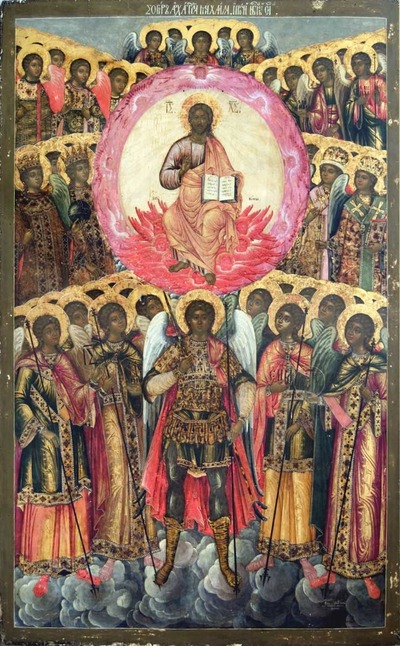 Angels
Synaxis of the Archangel Michael and the Other Bodiless Powers
Wikimedia Commons. Public Domain (CC0). The underlying 1704 icon by Kirill Ulanov at the Andrey Rublev Museum (Acc. КП 204) is in the public domain.
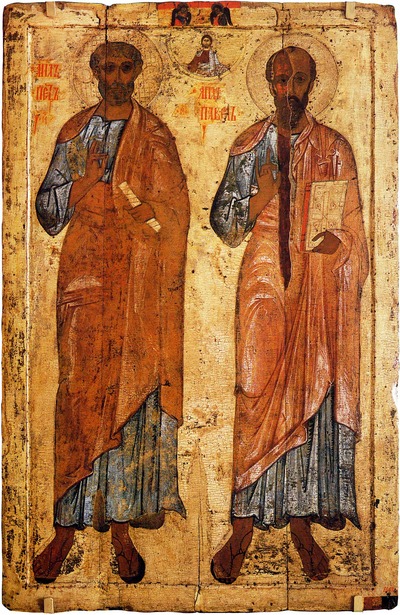 Apostles
The Holy Apostles Peter and Paul
Photographic reproduction in the public domain (Wikimedia Commons; faithful reproduction of a c. 1200 icon scanned from Sarabyanov and Smirnova, *Russian Icon Painting*, 2007). The underlying icon is in the public domain.
 Iconoclasm Debate
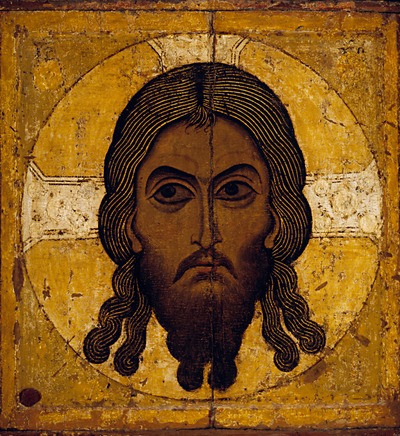
The Saviour Not Made by Hands (Spas Nerukotvorny)
Google Art Project / Wikimedia Commons. The underlying late-12th-century Novgorod-school icon at the Tretyakov Gallery is in the public domain. Photographic reproduction in the public domain (CC0 / structured-data convention).
 Life of Christ
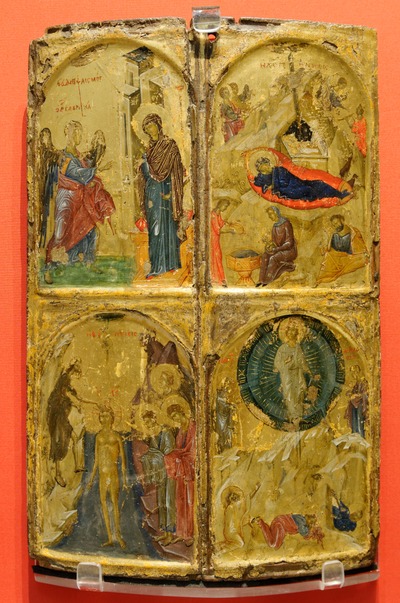
Four-Festival Icon (Annunciation, Nativity, Baptism, Transfiguration)
Photograph released under Creative Commons Attribution 2.5 Generic. The underlying c. 1310–1320 Byzantine icon at the British Museum (BM 1852.1-02.1) is in the public domain.
 Saints
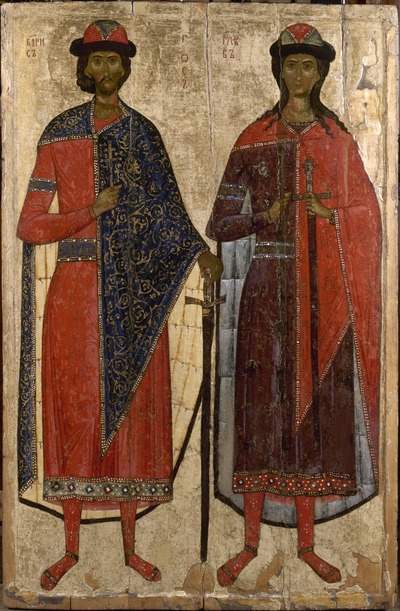
Saints Boris and Gleb
Google Art Project / Wikimedia Commons. The underlying mid-14th-century icon at the State Russian Museum is in the public domain. Photographic reproduction released under CC0/PD; structured metadata under CC BY-SA 4.0.
 Saints
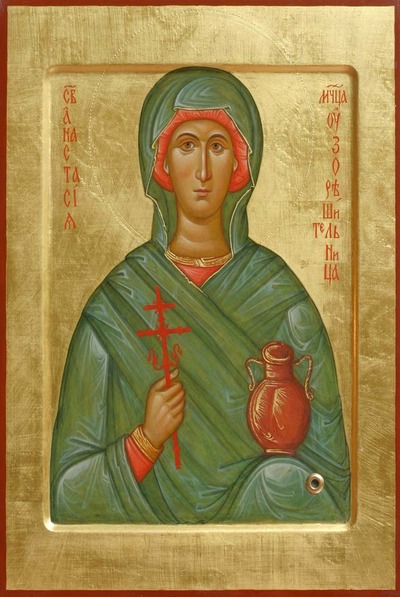
Saint Anastasia of Sirmium
Wikimedia Commons. Faithful photographic reproduction of a late-14th-century icon at the Hermitage. The underlying icon is in the public domain.
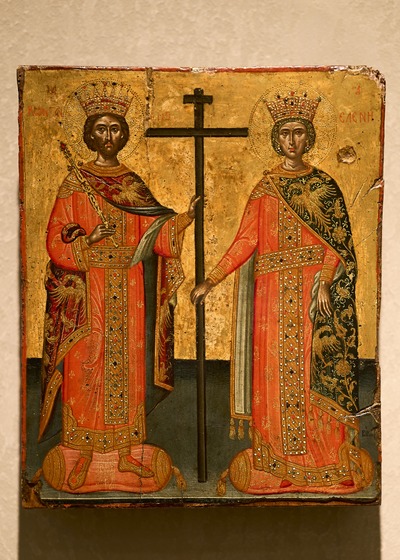 Saints
Saints Constantine and Helena with the True Cross
Wikimedia Commons. Faithful photographic reproduction of a post-Byzantine icon at the Byzantine and Christian Museum, Athens. The underlying icon is in the public domain.
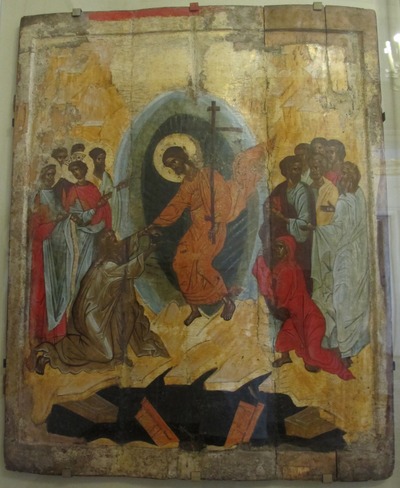 Second Coming
The Anastasis (Resurrection)
Photograph by Sailko (2011). Wikimedia Commons. Released under Creative Commons Attribution-ShareAlike 3.0 Unported (CC BY-SA 3.0) and GNU Free Documentation License 1.2+. The underlying late 15th-century Novgorod-school icon at the State Russian Museum is in the public domain.
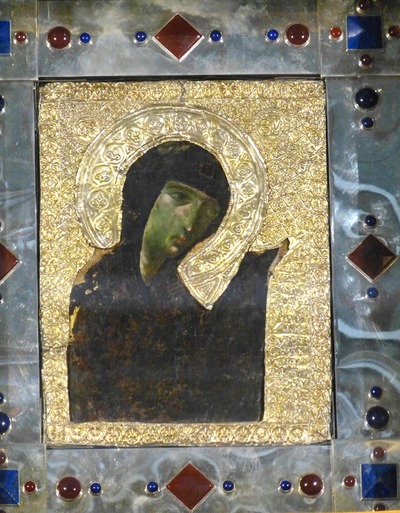 Theotokos
Theotokos Agiosoritissa
Photograph by Wolfgang Sauber (2017). Wikimedia Commons. Released under Creative Commons Attribution-ShareAlike 4.0 International (CC BY-SA 4.0). The underlying 11th–12th-century icon at Spoleto Cathedral is in the public domain.
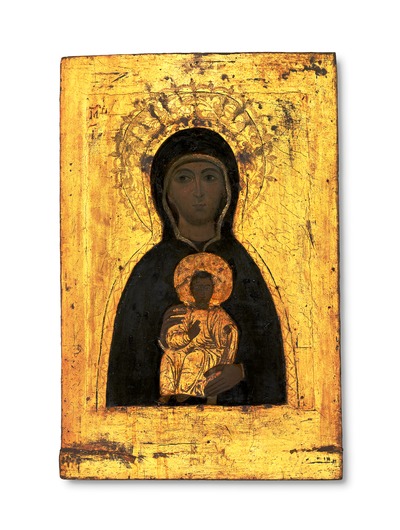 Theotokos
The Nicopeia (Theotokos Nikopoios — Virgin Bringer of Victory)
Wikimedia Commons (faithful photographic reproduction). Released under Creative Commons Attribution-ShareAlike 4.0 International (CC BY-SA 4.0). The underlying c. 1100–1120 Komnenian-era icon is in the public domain.